Summary
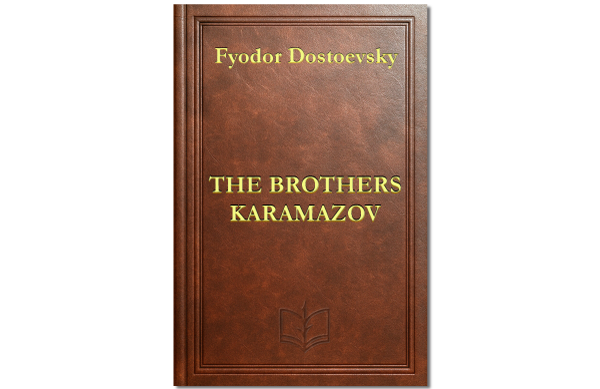
The Brothers Karamazov centers on the destructive Karamazov family, led by the corrupt and impulsive father, Fyodor Pavlovich. His three sons—Dmitri (passionate and reckless), Ivan (brilliant and skeptical), and Alyosha (spiritual and compassionate)—each respond differently to their father’s cruelty, their own desires, and the moral decay around them. When money, jealousy, and resentment ignite open conflict, the family becomes a pressure cooker where love and hatred blur into the same force.
The story builds toward a shocking crime that pulls the brothers into a public scandal and a battle over guilt. As the investigation unfolds, Dostoevsky turns the plot into a deep moral trial: not only who committed the act, but what it means to be responsible—through action, through belief, through neglect, and through the ideas we release into the world. Ivan’s intellectual rebellion and Alyosha’s faith-driven empathy collide, while Dmitri’s volatility makes him both sympathetic and suspect.
Beyond the murder story, the novel explores big human questions: faith versus doubt, freedom versus responsibility, the hunger for meaning, and how suffering can either destroy a person or deepen them. By the end, The Brothers Karamazov feels less like a mystery solved and more like a mirror held up to the soul—asking whether anyone is truly innocent when love fails and conscience is ignored.
Key Quotes & Meanings
- (Paraphrased) “If nothing is sacred, everything becomes permitted.” — When morality is reduced to opinion, power fills the vacuum.
- (Paraphrased) “Each person is responsible for everyone.” — Dostoevsky’s radical idea of shared moral accountability.
- (Paraphrased) “Freedom without meaning becomes torment.” — Choice alone doesn’t save us; purpose matters.
- (Paraphrased) “Love is proven in action, not words.” — Compassion is practical, not sentimental.
Key Takeaways
- It’s a murder story that becomes a spiritual and philosophical investigation.
- Ideas have consequences: what you believe shapes what you allow.
- Family wounds echo into society—private corruption becomes public tragedy.
- Dostoevsky argues that responsibility is wider than legality: conscience matters.
Who Should Read This
- Readers who want a profound classic about morality, faith, and human psychology.
- Fans of courtroom drama, family tragedy, and big philosophical conflicts.
- Anyone ready for a long, demanding book with major emotional payoff.