Summary
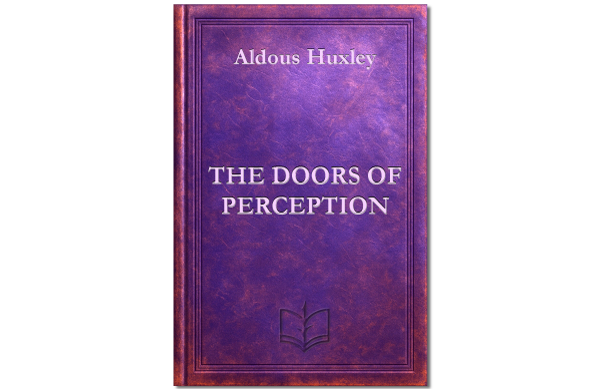
The Doors of Perception is Huxley’s short, influential essay describing a mescaline experience and what it suggests about consciousness. Rather than treating the event as escapism, Huxley frames it as an experiment: if the mind usually filters reality to help us survive, psychedelic experience may temporarily reduce that filter—allowing perception to become vivid, direct, and strangely meaningful. Ordinary objects—flowers, fabric, light—appear radiant and “suchness”-filled, as if value and presence are felt before language and habit label them.
Huxley explores the idea that the brain may function as a “reducing valve,” limiting awareness so we can navigate daily life. When that valve loosens, a person might access a broader field of consciousness—an experience sometimes described by mystics and artists. He also considers the cultural and ethical stakes: art, religion, and ritual often aim at similar transformations, but modern society may treat altered states as dangerous or irrelevant. While Huxley notes potential benefits—wonder, humility, insight—he also hints at limits: expanded perception does not automatically make you wise, moral, or functional. The essay ultimately asks what we lose when we live trapped inside routine perception—and what it means to see the world more directly, even briefly.
Key Quotes & Meanings
- “The doors of perception” — A metaphor for cleansing the mind’s filters so reality is experienced more fully and directly.
- “Reducing valve” — The brain filters overwhelming reality into a usable stream; altered states may relax that filter.
- “Suchness” — Experiencing things as they are, before interpretation; a glimpse of perception without habit.
- “This is how one ought to see…” — Not a constant high, but a reminder that attention can transform ordinary life.
Key Takeaways
- Human perception is shaped by survival and habit; reality may be larger than what we normally register.
- Altered states can reveal beauty and presence, but insight needs integration to become wisdom.
- Art, mysticism, and psychedelics may overlap in their aim: changing how we see, not what we believe.
- Attention is the real theme—whether achieved chemically or through disciplined practice.
Who Should Read This
- Readers interested in consciousness, perception, mysticism, and the psychology of experience.
- Fans of short, idea-driven nonfiction (philosophy-meets-memoir).
- Anyone curious about why ordinary life can feel “filtered,” and how attention reshapes reality.