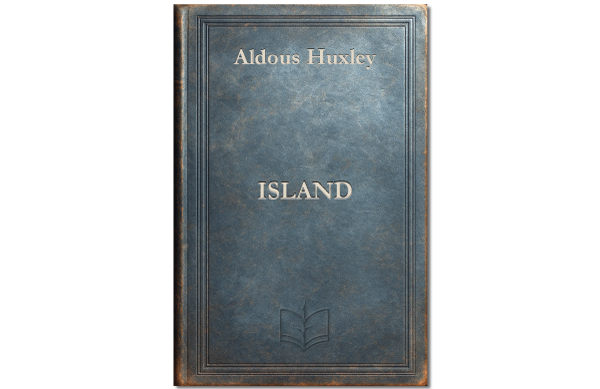
Island — Summary
Island follows Will Farnaby, a cynical journalist who shipwrecks on Pala—an isolated island nation that has built a rare balance of science, spirituality, and humane politics. As Will recovers, he is drawn into Pala’s daily life: mindful education, psychological self-awareness, responsible sexuality, cooperative economics, and a culture designed to reduce suffering without crushing freedom. The island’s people don’t aim for utopia through control; they aim for clarity—training attention, questioning ego, and building systems that support compassion and truth.
Will’s growing admiration is complicated by his own past, including guilt, manipulation, and the habits of a world driven by greed. Outside forces close in: Pala’s neighbor and multinational interests want the island’s oil and strategic position. Internal tensions also rise, as some leaders consider trading Pala’s values for security and modernization. Will becomes both witness and participant as Pala’s experiment is tested by realpolitik. By the end, Huxley suggests that wisdom and humane living are possible—but fragile—especially when confronted by power, fear, and appetites that societies rarely outgrow.
Key Quotes & Meanings
- “Attention, attention.” — A core practice on Pala: training awareness so you can see reality clearly instead of reacting on autopilot.
- “Here and now.” — The island’s antidote to anxiety and illusion: presence as a practical tool for sanity, not a vague slogan.
- “The enemy is the not-me.” — Ego and separation fuel cruelty; recognizing shared humanity is the beginning of ethical action.
- “It’s dark because you are trying too hard.” — Insight can’t be forced; calm attention often reveals what strain and fear hide.
Key Takeaways
- A healthy society can combine science and spirituality without becoming dogmatic about either.
- Education that trains attention and emotional literacy can reduce suffering at its source.
- Utopias fail when they ignore power, propaganda, and economic pressure from the outside world.
- Personal transformation matters, but systems and incentives still decide a culture’s fate.
Who Should Read This
- Readers who like philosophical fiction with social ideas (a hopeful counterpoint to Brave New World).
- Anyone interested in mindfulness, psychology, education reform, or “practical” spirituality.
- Fans of utopian/dystopian thought experiments and political morality.