Summary
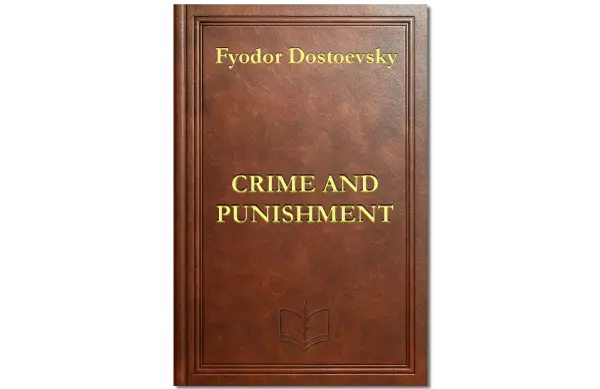
Crime and Punishment follows Rodion Raskolnikov, a poor former law student in St. Petersburg who becomes consumed by a theory that certain extraordinary individuals have the right to commit immoral acts if it benefits society. Fyodor Dostoevsky portrays Raskolnikov as believing himself superior and destined for greatness, leading him to murder a greedy pawnbroker, convinced the act will free him to fulfill a greater purpose. This approach is quintessential Fyodor Dostoevsk, blending complex characters with profound philosophical themes.
Instead, the crime unleashes a psychological collapse. Raskolnikov is tormented by guilt, paranoia, and a suffocating fear that his rationalizations were nothing more than delusion. As the investigation tightens, he encounters several figures who challenge his worldview, echoing the timeless dilemmas often explored in Fyodor Dostoevsk novels.
Sonia, a young woman forced into prostitution to support her family, becomes the moral center of the story. Her compassion and spiritual resilience contrast sharply with Raskolnikov’s intellectual pride. Meanwhile, Porfiry Petrovich, the clever detective, subtly interrogates him, revealing psychological insight rather than brute force in classic Fyodor Dostoevsk style.
The novel unfolds through intense dialogues, fevered inner monologues, and symbolic encounters that expose Raskolnikov’s fractured conscience. Ultimately, Raskolnikov confesses and is sentenced to Siberia, where Sonia follows him. It is there, in exile, that he begins a slow and painful path toward redemption—suggesting that true salvation lies not in intellect or ideology but in humility, human connection, and spiritual rebirth.
Dostoevsky’s novel is a profound exploration of morality, suffering, alienation, and the search for meaning within a corrupt and chaotic world.
Key Quotes & Meanings
“Pain and suffering are always inevitable for a large intelligence and a deep heart.”
A reflection on how heightened awareness leads to inner turmoil.
“To go wrong in one’s own way is better than to go right in someone else’s.”
Raskolnikov’s justification for rejecting societal norms.
“The darker the night, the brighter the stars.”
Sonia’s hopeful belief in redemption and spiritual light.
Key Takeaways
- Pride and ideology can distort moral judgment.
- Guilt is inescapable and psychologically destructive.
- Compassion has the power to heal and redeem.
- Alienation intensifies suffering and moral confusion.
- Redemption is possible through humility and connection.
Who Should Read This?
Ideal for adults, philosophy readers, psychology enthusiasts, and anyone interested in deep moral questions. Recommended for those who enjoy character-driven, introspective literature that explores the human psyche typical of Fyodor Dostoevsk’s works.